Last updated November 22, 2026
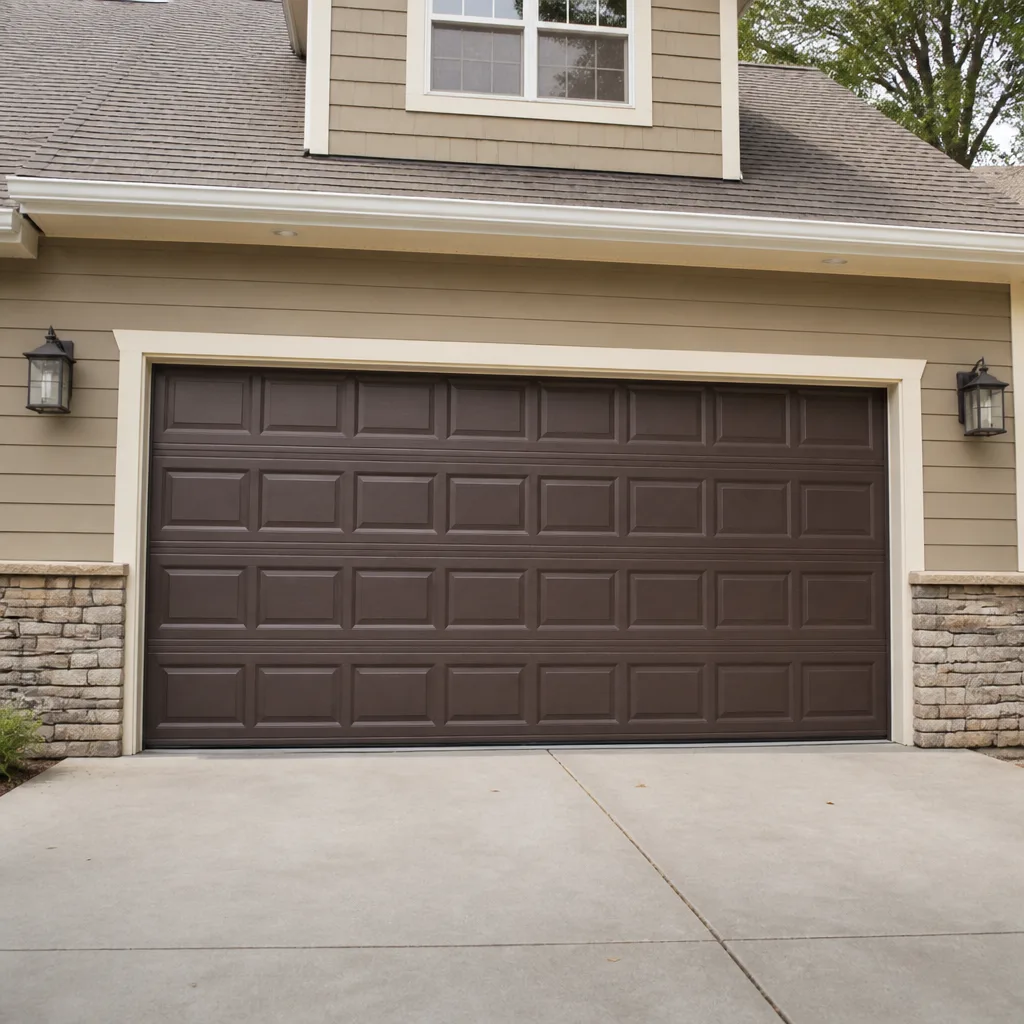 Raised-panel steel
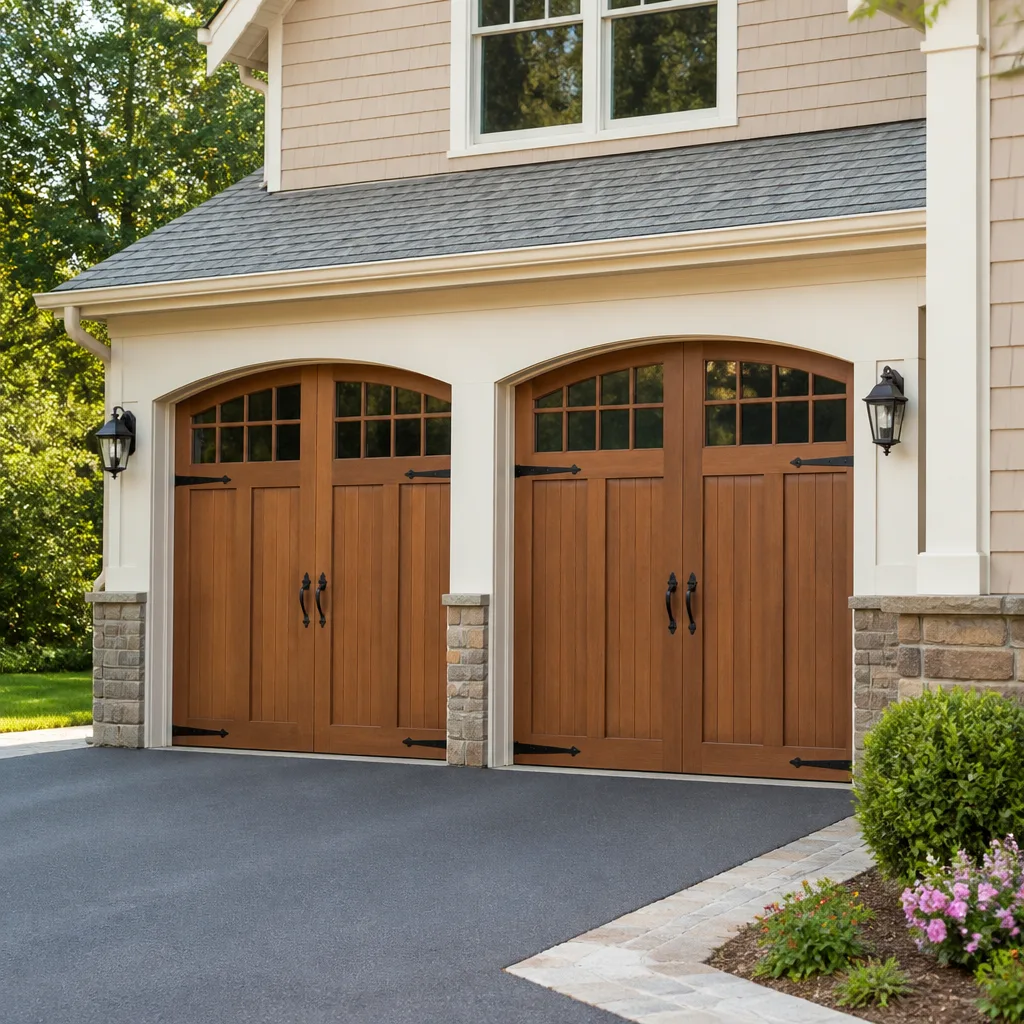 Carriage house
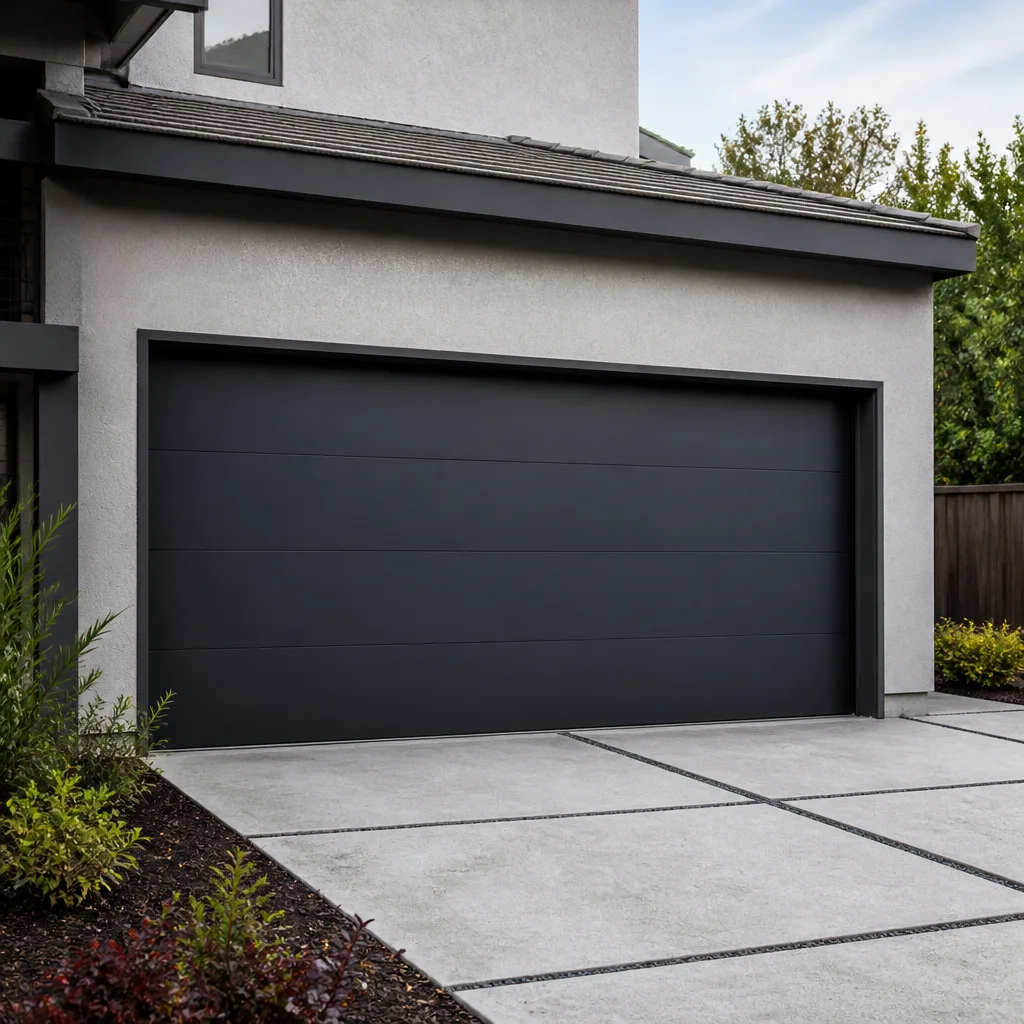 Modern flush
 Full-view glass
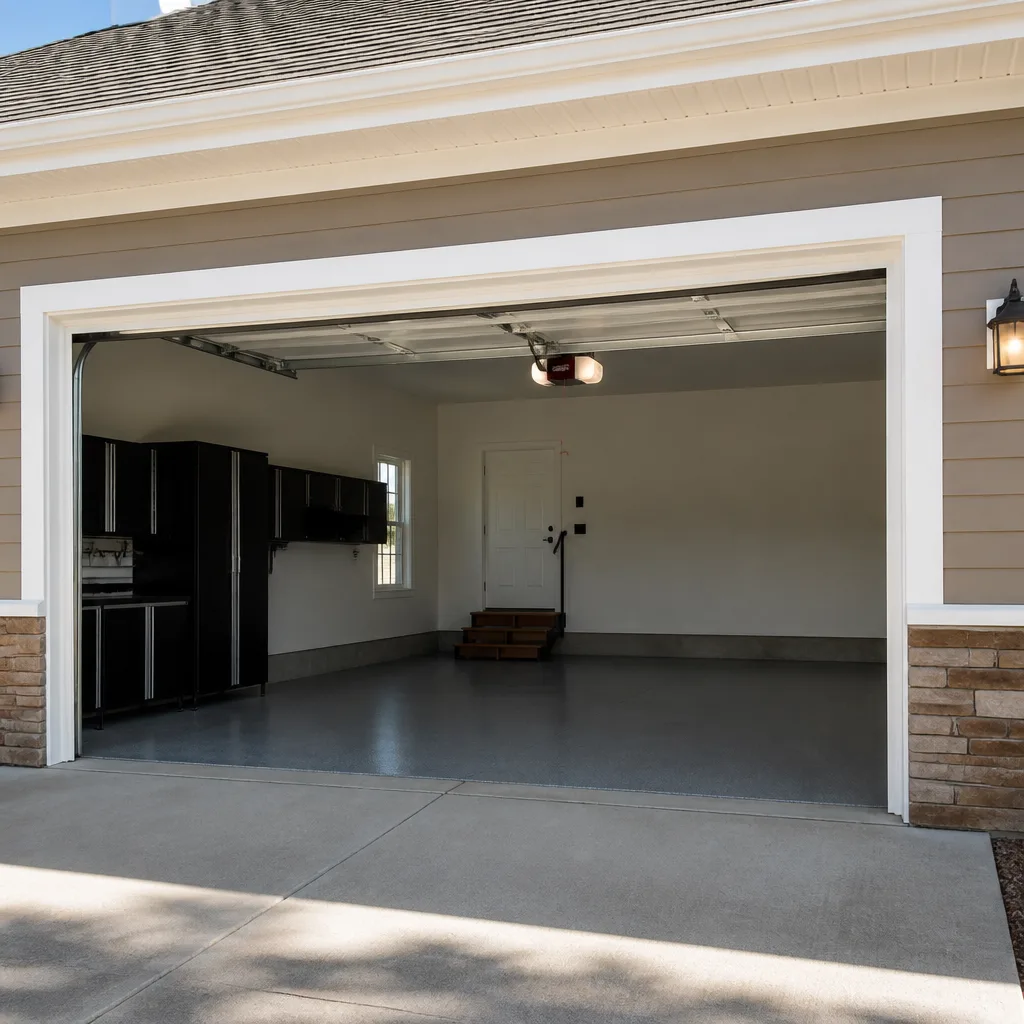 LiftMaster openers
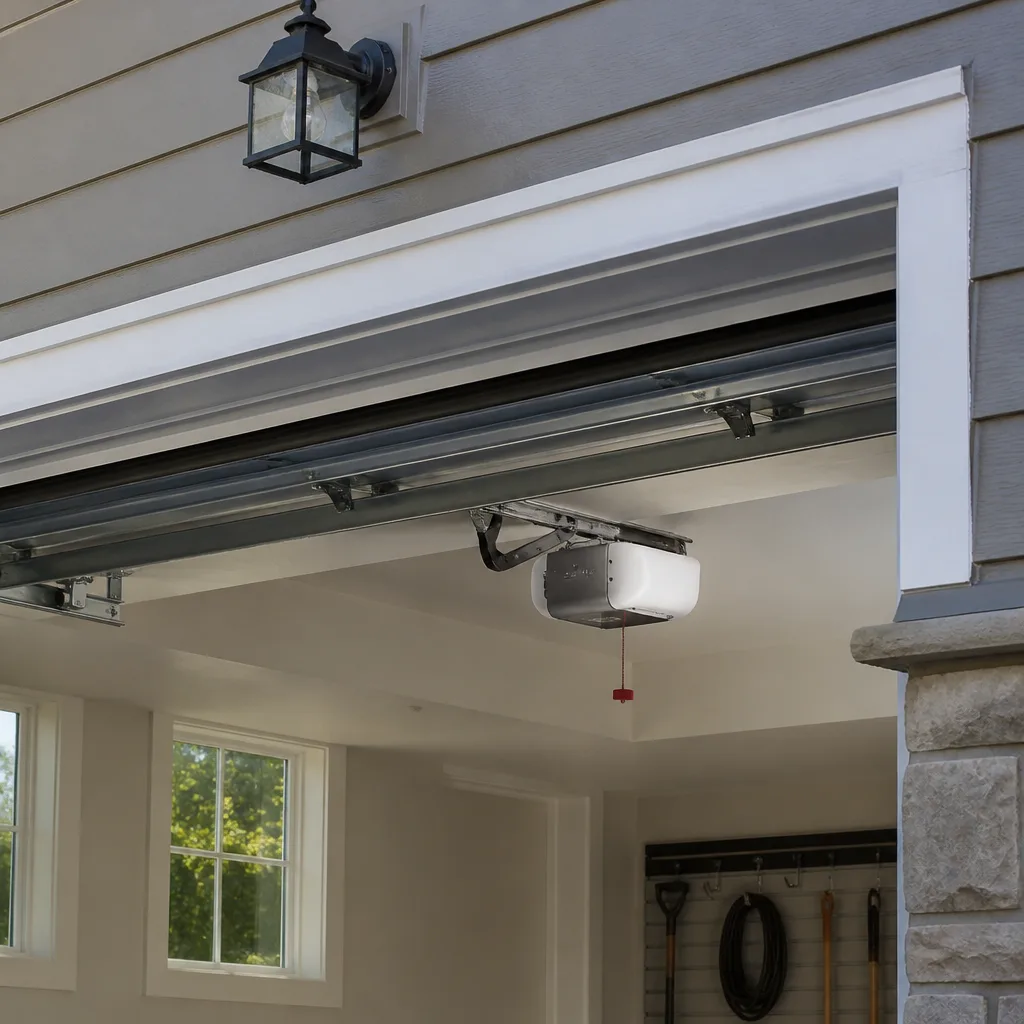 Chamberlain openers
Full 25-point door and opener safety check with every visit - springs, cables, rollers, tracks, and your LiftMaster or Chamberlain opener included
You get a price before we start. It does not change when the pro arrives.
Get your free estimateGarage Door Warning Signs: A Burnsville Homeowner’s Reference Guide
A garage door that reverses before it reaches the floor is not broken. It is doing exactly what the safety sensors tell it to do. The door that should worry you is the one that hesitates halfway down, shudders, and then closes anyway. Most homeowners have those two signals backwards, and that confusion is what turns a cheap repair into a stranded car and a cold house. This guide gives you a three-tier system for reading what your door is telling you, so you can sort a normal noise from a genuine warning. We’ll cover what to monitor, what to schedule, and what means you stop using the door today in Burnsville.
Quick Answer
Garage door warning signs fall into three tiers: monitor, schedule soon, and stop using now. A single loud bang from the torsion bar, a door that won’t stay up, or a visibly sagging bottom section means stop using the door today and call a professional. Grinding, hesitation, and vibration that come on gradually usually belong in the schedule-soon tier, and a slightly noisier door in cold weather is often just monitor.
Styles & brands we work with
- Raised-panel steel
- Carriage house
- Modern flush
- Full-view glass
- LiftMaster openers
- Chamberlain openers
Table of Contents
- The Three-Tier Severity System
- The 12 Most Common Warning Signs, Sorted by Tier
- Reading the Door by Sound and Sight: Opener, Door, or Spring?
- Warning Signs That Show Up More in a Minnesota Winter
- The Visual Signs of a Torsion Spring Under Improper Tension
- Normal Settling Noises vs. Noises That Need Investigation
- A Safe Weekly Check Any Burnsville Homeowner Can Do
- What a Professional Diagnosis Costs in Burnsville
The Three-Tier Severity System
Before you can triage a symptom, you need a framework. We sort every symptom a homeowner describes into one of three tiers, and that sorting decides whether we schedule a repair visit, book a same-day call, or tell the caller to stop operating the door until a technician arrives.
Tier 1 – Monitor. The door runs smoothly, opens and closes fully, and the only change is a minor increase in noise or a slight vibration. Nothing is moving freely that shouldn’t, nothing is visibly bent, and the door travels at a steady speed. Write the date on the calendar and recheck in a week.
Tier 2 – Schedule soon. The door still works, but you notice hesitation, grinding, jerky travel, a section that seems to catch, or an opener that strains. These are the signs of wear that is accelerating. It’s not an emergency today, but it will get worse, and postponing a small repair is what leads to a bigger one.
Tier 3 – Stop using now. A loud bang. A door that falls or drops quickly. A door that won’t stay up when you lift it. A visibly broken or dangling spring or cable. A garage door that has come off one of its tracks. Any of these means no more opening the door until a technician inspects it. A garage door is a heavy moving object under significant tension, and continuing to run it in this state puts people and property at risk.
The value in framing it this way is that you stop guessing. You read the symptom, place it in a tier, and act. Call our team at (844) 443-4836 and we’ll walk you through the same triage on the phone before anyone is booked.
The 12 Most Common Warning Signs, Sorted by Tier
Here is the list we keep in mind when a Burnsville homeowner describes a problem. Each sign has criteria that fix it to a tier.
Tier 3 – Stop using the door now:
- A single loud bang from above the door. This usually signals a broken extension spring or torsion spring. Stop, don’t lift the door by hand, and call a specialist.
- The door won’t stay up when you lift it partway. A working door should hold. If it sags or falls, a spring has failed.
- A visible gap in a torsion spring coil. A torsion spring is one tight coil; a gap means it has snapped.
- A dangling or frayed cable. Cables are under extreme tension. Never touch one that has come loose.
- The door has slipped off a track or is visibly crooked in the frame. Continuing to run it can bend panels and damage the tracks.
Tier 2 – Schedule soon:
- The door hesitates or binds at one point in its travel. Often a roller or hinge issue, so it’s a candidate for garage door repair.
- Grinding, squealing, or a rhythmic scraping. Usually a roller or track problem that gets worse with use.
- The opener strains or seems to struggle to lift the door. The door has gained effective weight through friction, or the opener is fading.
- The door closes then reverses for no obvious reason. Safety sensors or a limit adjustment, which falls under garage door opener repair.
- Shuddering or jerking during travel. A sign of worn hardware or an unbalanced door.
Tier 1 – Monitor:
- A slightly louder door in cold weather. Metal contracts and lubricant thickens, so some extra noise is normal in a Minnesota winter. Watch it, but don’t panic.
- A faint creak that comes and goes. A single creak with no other symptom usually just means the door needs a service. Log the date and check again in a week.
Reading the Door by Sound and Sight: Opener, Door, or Spring?
You can tell a lot about where a fault lies without picking up a single tool. The trick is to separate the three systems that make a door work: the opener, the door hardware, and the springs. Each one sounds and looks different.
Here is how to sort them by observation alone:
- The opener. If the motor runs but the door doesn’t move, or if the door reverses at the same point every time, the problem is likely in the opener or its safety sensors. You’ll hear the motor hum clearly and smoothly.
- The door hardware. If the door travels but you hear grinding, scraping, or a rhythmic clunk, the trouble is likely in the rollers, hinges, or tracks. The sound usually comes from a specific spot in the door’s travel.
- The springs. If you hear one loud bang, or if the door suddenly feels much heavier to lift by hand, that’s a spring problem. Springs fail with a sound, not a scrape.
The distinction matters because each one has a different urgency and a different repair path. An opener issue might be a setting or a worn gear. A hardware issue is usually a roller or hinge replacement. A spring failure is the dangerous one, and it goes straight into the stop-using tier. Because we work on LiftMaster and Chamberlain openers every day, we can tell from a five-second phone description which system a sound is coming from, and that saves you a wasted visit. When in doubt, describe the sound and where it comes from in the door’s travel, not just “it’s noisy.”
Warning Signs That Show Up More in a Minnesota Winter
Cold changes how a garage door behaves. The materials, the lubricants, and the ground around the door all respond to subfreezing temperatures, and a few warning signs are far more common in Burnsville from late fall through early spring than at any other time of year.
Here’s what we see more often when the temperature drops:
- A stiffer, slower-feeling door. Lubricant thickens in the cold, so the door moves less freely. If it still opens fully, it usually just needs a service.
- A frozen bottom seal sticking to the floor. The door opens a few inches and then releases with a pop. That’s a seal issue, not a spring, but it strains the opener if it happens daily.
- Contraction-related noise. Metal sections and tracks shrink slightly in the cold, so gaps and clearances change. Some extra creaking is normal; a sudden new clunk is worth a look.
- A door that struggles to close as the weather strip firms up. The opener may reverse because the seal is resisting. That’s a sensor or limit adjustment, and it needs attention before the opener motor wears.
- Springs that fail after a cold snap. Spring steel is more brittle when cold, and the extra load of a stiff door piles on. A spring that has been at the end of its life is more likely to snap in a cold snap, which is why we treat a bang in January exactly the same as a bang in July.
Winter also changes how you should watch the door. After a cold night, do a visual scan of the springs and cables before you open it for the first time. That one habit catches a broken spring before it drops the door. Our technicians have up to 14 years of experience reading these winter-specific symptoms, and we take the cold weather seriously because it’s a big part of what makes a Burnsville door behave differently from a door in a warmer climate.
The Visual Signs of a Torsion Spring Under Improper Tension
Most of what you can safely observe about a torsion spring is about position, not tension. You can’t measure tension with your eyes, and you should never try to feel it with your hands. But there are specific visual indicators that tell you something is wrong and that the door should not run.
Look for these:
- A gap in the coil. A healthy torsion spring is one continuous, tightly wound coil. A clear gap means it has broken, and a broken spring has zero tension where it once carried the door’s weight.
- A coil that looks loose or has unwound unevenly. If the coil narrows or widens oddly along its length, something has shifted and the tension is not what it should be.
- A spring that has separated from its winding cone or anchor. The cones at each end should be tight against the coil. A gap or a visibly loose cone is a fault.
- A door that sags on one side. An off-level door can point to uneven spring tension, and it’s a symptom that belongs in the stop-using tier until a technician checks it.
- A torsion bar or tube that has twisted or dropped out of line. This is rare but serious. Stop using the door.
This is the most dangerous part of the whole garage door system. A torsion spring stores a large amount of energy, and adjusting or replacing one involves releasing and re-setting that energy. The most common DIY misread is assuming a spring looks “fine” because it hasn’t snapped, so it must be safe. A spring that has lost tension gradually can look intact and still be the reason the door drops. Do not attempt to tighten, unwind, or adjust a torsion spring yourself. “It looks fine” is not the same as safe. This is a job for a technician, and if you see any of the indicators above, stop using the door and call for garage door spring repair.
Normal Settling Noises vs. Noises That Need Investigation
Here is the rule that helps most homeowners: a normal settling noise is steady and repeatable, while a noise that needs investigation is new, sudden, or changing. A truly quiet garage door is a bit of a myth. Doors settle, hardware works loose, and the weather moves the ground under the tracks.
Listen for these patterns:
- Normal settling. A gentle creak or a light clunk at the same point in the door’s travel, present for a while, not getting louder. Increasing vibration as the door settles through a season is usually cosmetic.
- Needs investigation. A sudden new noise. A grinding or scraping that gets louder each time. A pop, snap, or bang. A rattle that moves from one side of the door to the other.
Timing matters too. If a noise only appears when the door closes, the issue is usually in the tracks, the hinges, or the bottom seal. If it appears on both opening and closing, it’s more likely to be the springs or the opener. If it only appears when the door is cold, it’s usually a seasonal item. A door that has been quiet for years and suddenly grinds is telling you something changed, and that’s the moment to schedule a check rather than wait for it to fail on a morning when you need the car.
A Safe Weekly Check Any Burnsville Homeowner Can Do
A two-minute visual and audio check once a week catches most of the early warning signs before they become a stop-using event. The check is purely observational: you shouldn’t need to lift the door by hand or touch anything under tension.
- Look at both springs before opening the door. Check for a gap in the coil, a loose cone, or an obvious change in how the coil looks compared to last week.
- Look at both cables. They should sit cleanly on their drums. A loose or frayed cable is a stop-using sign.
- Look at the tracks. Run your eye up each side. Bent tracks, debris on the tracks, or a gap at the floor are worth noting.
- Watch the door through one full cycle. Note hesitations, jerks, and any point where it sounds different.
- Listen while it runs. Note whether the noise is new.
- Test the safety reversal. If you have an object like a roll of paper towels, place it in the door’s path and confirm the door reverses. This confirms the sensors are working.
- Look at the bottom seal. It should meet the floor evenly. A gap or a seal that sticks means the opener has to work harder.
Write down what you see and when. A dated note is the most useful thing you can hand a technician, because it tells them exactly how long a symptom has been present. If any single check returns a stop-using sign, close the garage door and call us at (844) 443-4836. If it’s a monitor or schedule-soon sign, book a check at your convenience. Our technicians have up to 14 years of experience, and most of them can name a failing component from the sound alone. We work on Craftsman and Raynor doors every day, so we know exactly what to look for.
What a Professional Diagnosis Costs in Burnsville
A standard service call in the Burnsville area typically costs between $80 and $150 for the visit and diagnosis, and a spring repair usually runs $180 to $340 per spring. A matched pair of springs is replaced together, so expect about twice that for a pair. We quote and agree the price before any work starts, so the written estimate is the number you pay.
The table below lists typical estimated ranges for what a Burnsville technician is likely to recommend after a warning-sign call:
| Repair type | Typical estimate |
|---|---|
| Service call and diagnosis | $80 – $150 |
| Single torsion or extension spring | $180 – $340 per spring |
| Matched pair of springs | About twice the single-spring range |
| Roller and hinge replacement | Quoted on inspection |
| Track realignment | Quoted on inspection |
| Opener repair or adjustment | Quoted on inspection |
Acting on a Tier 2 warning is almost always cheaper than waiting for it to become a Tier 3 failure. A worn roller doesn’t bend a panel, but a door that’s been grinding on a worn roller for months can. And a door that has snapped a spring can’t be lifted by the opener, which means the door, the car, and the whole household are stuck until it’s fixed. Call (844) 443-4836 for an exact quote, and remember that we don’t promise same-day service for every job, but we do promise an agreed price before we start. For anything that involves a full replacement rather than a repair, we handle the measure, the order, and the installation from a single call.
Common Mistakes to Avoid
- Mistaking a reversing door for a fault. A door that reverses before it touches the floor is usually the safety sensors doing their job. Look for dirt, a misaligned sensor, or a trip hazard before assuming the opener has failed.
- Ignoring a door that feels heavier. A door that’s suddenly harder to lift by hand is a spring that has lost tension. Please resist the urge to “help” it by lifting harder. That’s how a spring failure turns into an injury.
- Running the door after a loud bang. The bang is usually a snapped spring. Keep the door closed and call a specialist. Running it risks dropping the door or bending panels.
- Assuming a noisy door in winter is always broken. In a Burnsville winter, cold thickens lubricant and contracts metal, so a slightly louder door is normal. A sudden new grind or a bang is not.
- Letting a track bend get worse. A door running on a bent track chews the rollers and can damage the panels. Bending it back by force usually makes it worse.
- Judging a spring by look alone. A spring that looks intact can be well under the wrong tension. Don’t touch it, and don’t assume it’s safe because you can’t see a crack.
- Postponing a schedule-soon symptom. A worn roller that you can hear is a small repair. Left alone, it becomes a track or opener problem, and the estimate goes up accordingly.
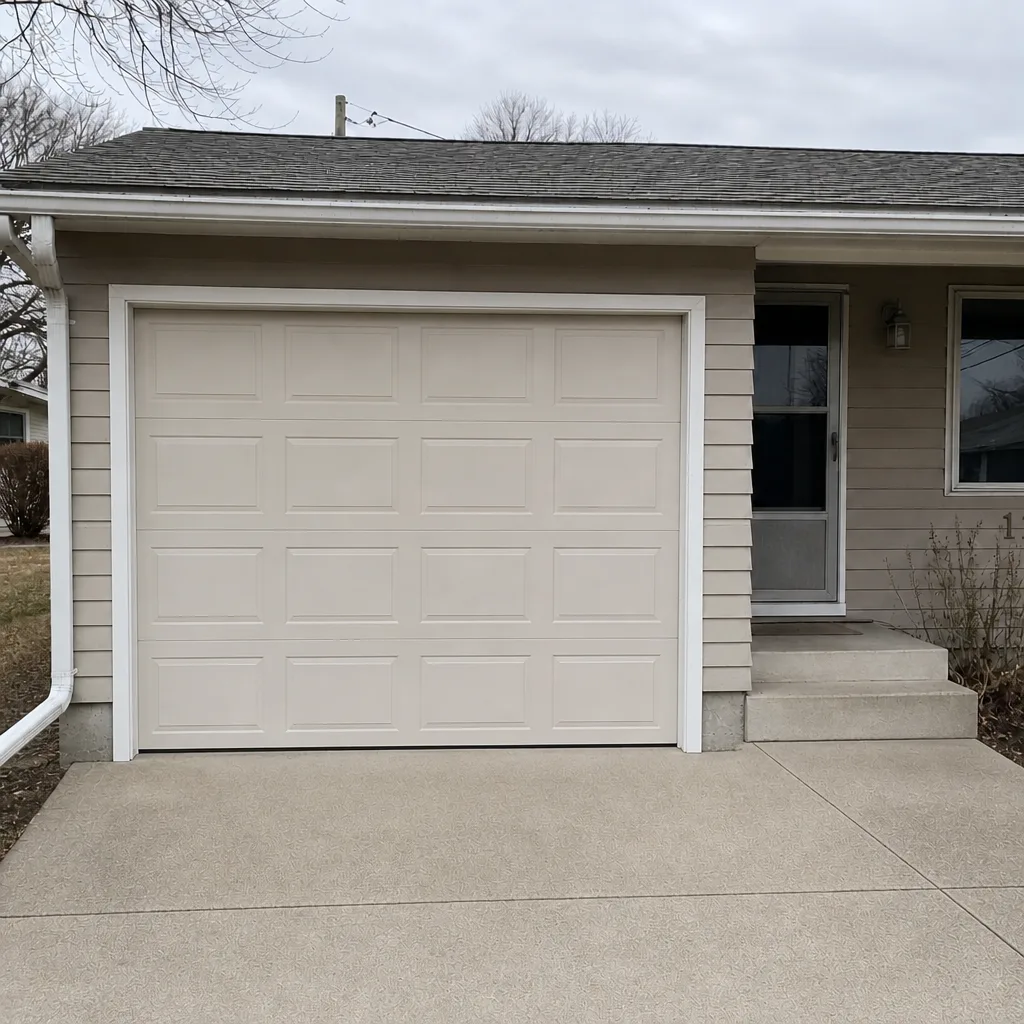
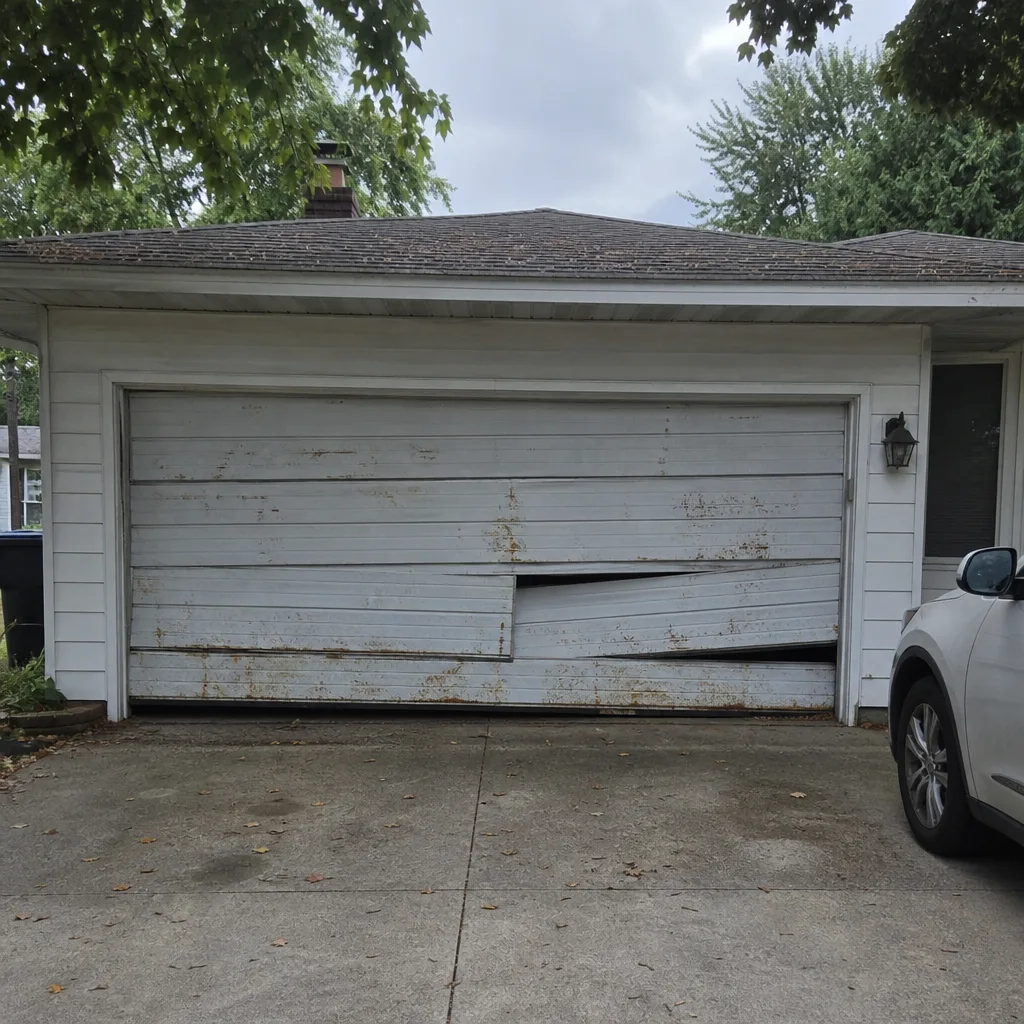
See the difference
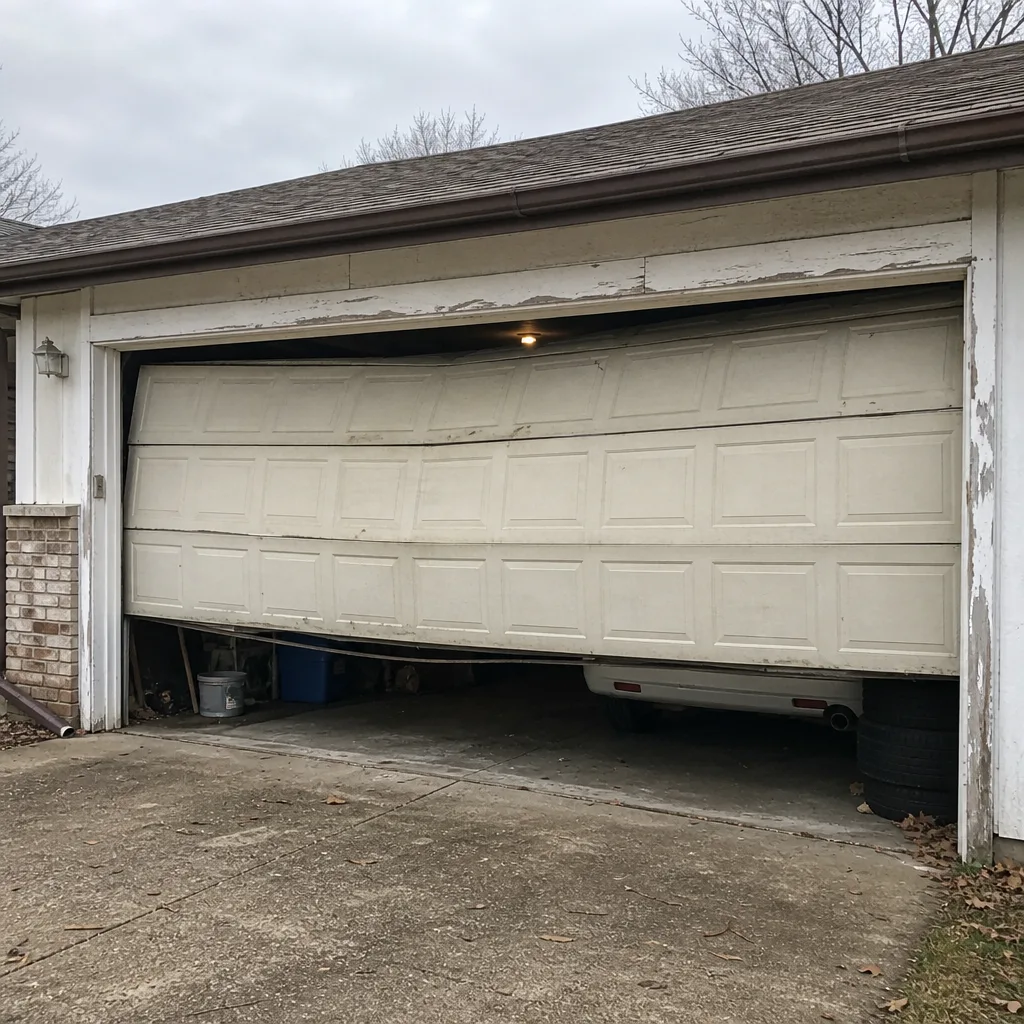 Before
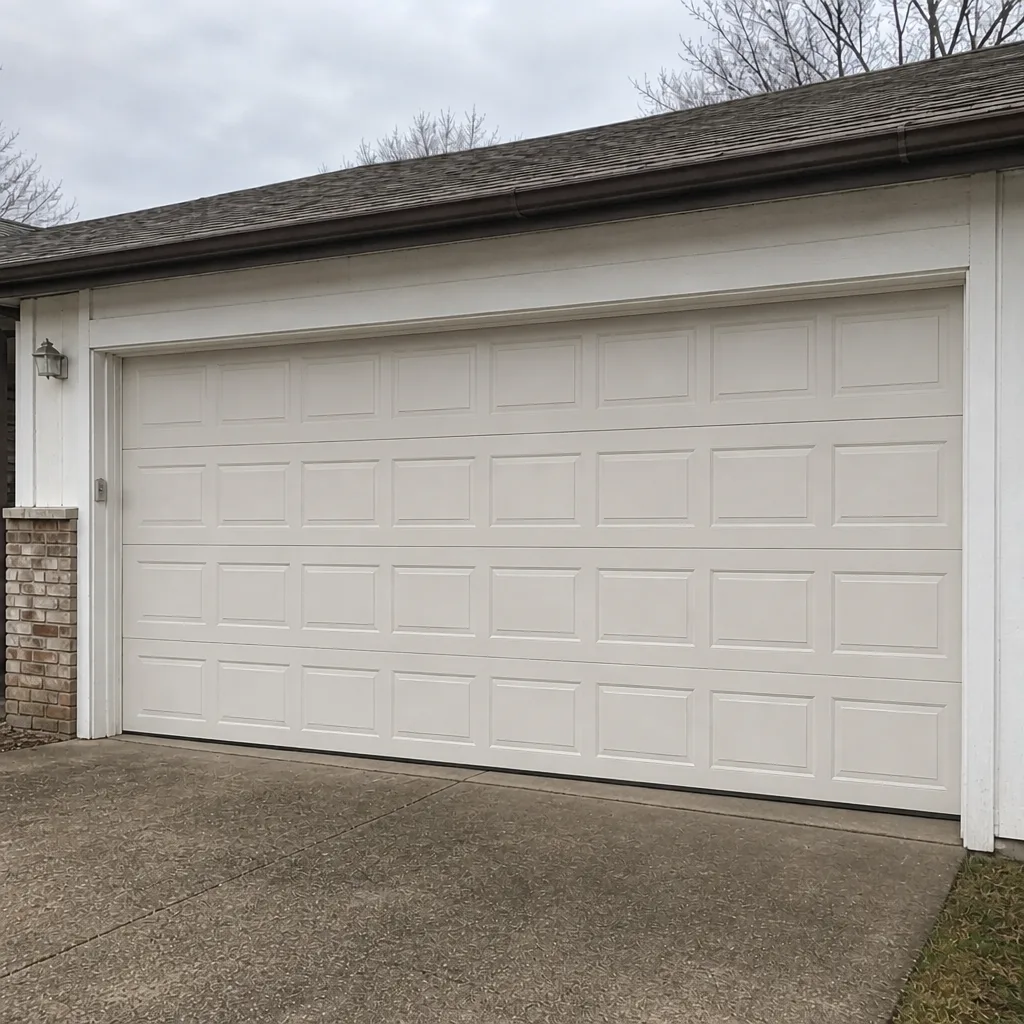 After
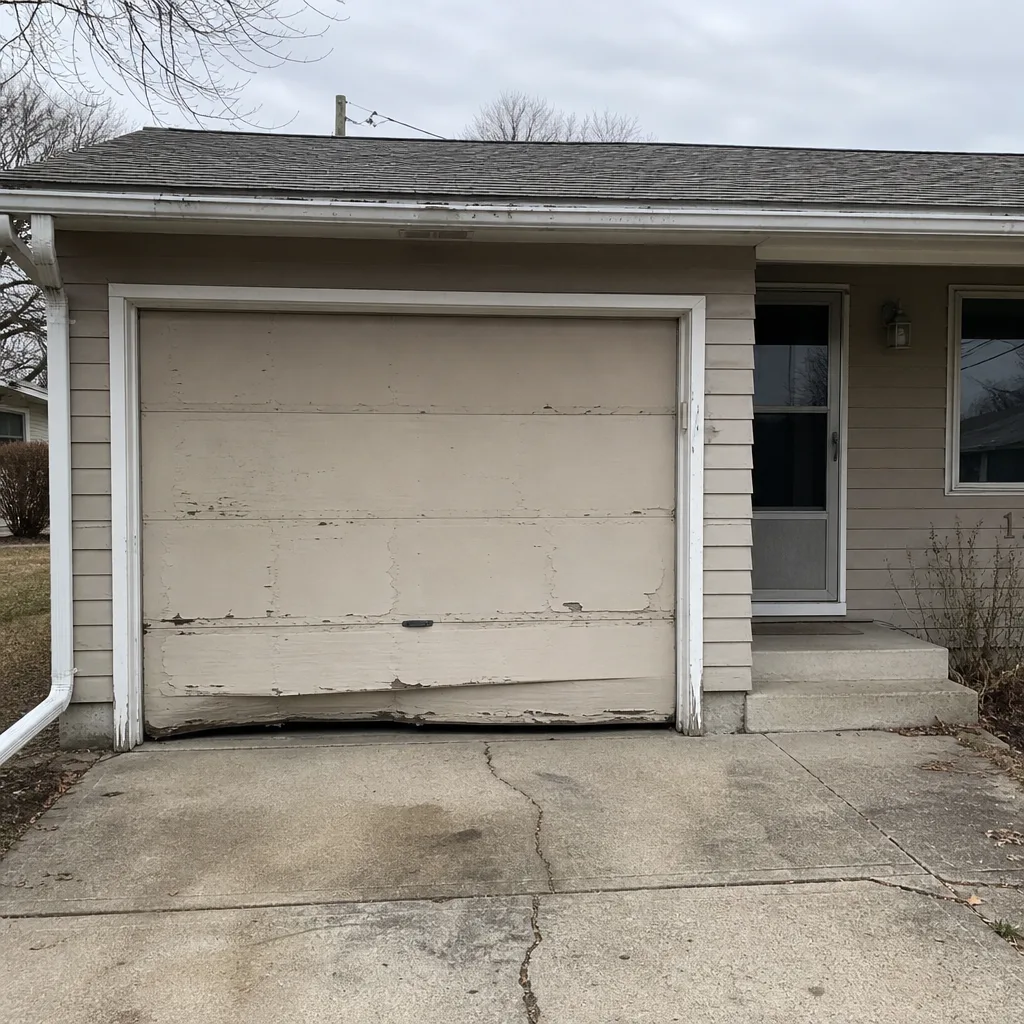 Before
 After
 Before
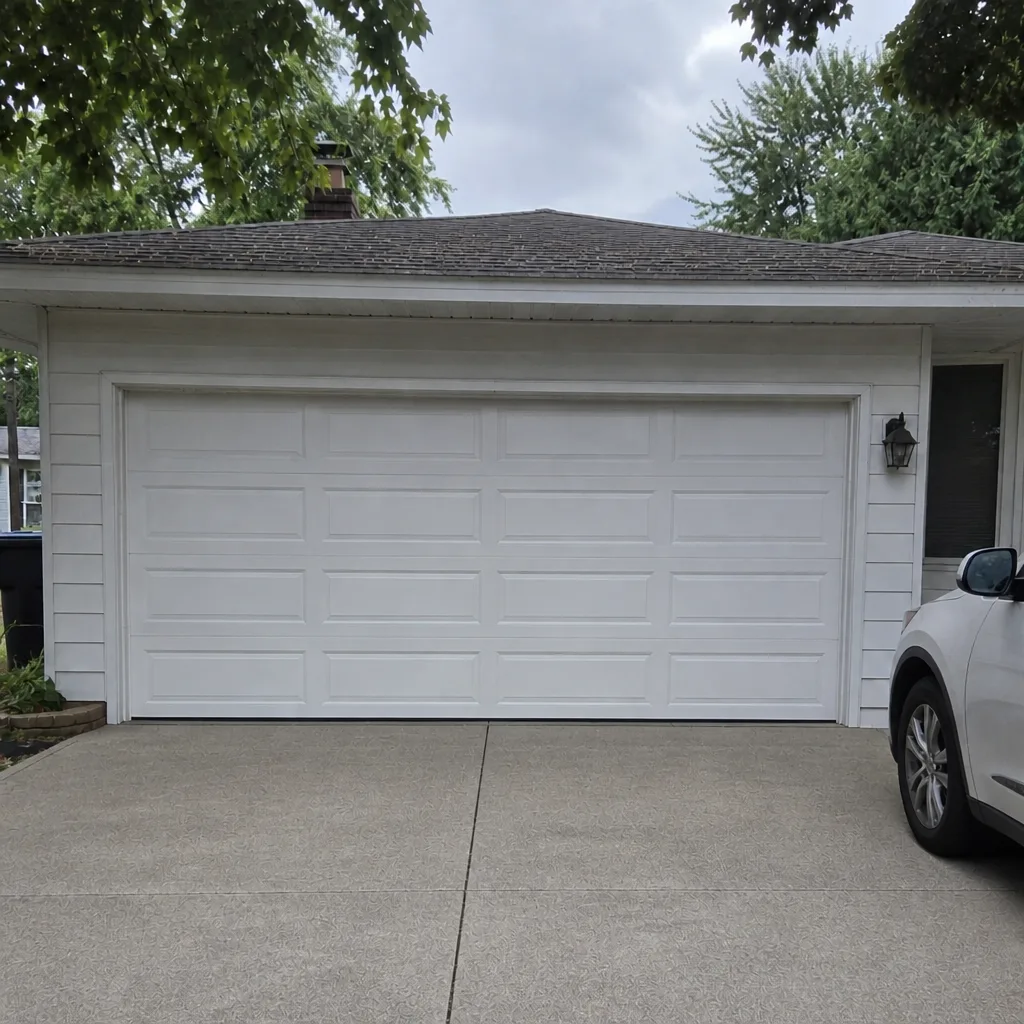 After
When to Call a Professional
Call a professional the moment you see a Tier 3 sign: a loud bang, a door that won’t stay up, a visibly broken or loose spring, a dangling cable, a door off track, or a door that sags on one side. Call sooner if a Tier 2 symptom has been present for more than a couple of weeks and is getting worse, or if the opener strains and you rely on the door daily. Don’t wait for a symptom to become an emergency. Burnsville Garage Door Repair Pros offers free estimates in Burnsville, and our technicians have up to 14 years of experience with brands like LiftMaster, Chamberlain, Genie, Clopay, Amarr, Wayne Dalton, Craftsman, and Raynor. We handle Burnsville Garage Door Repair Pros work as a single-trade specialist, and we book service calls each day, so a warning-sign check is rarely far out. When the door is stuck, emergency service is available and it’s part of what we do.
Frequently Asked Questions
The first sign is usually a bang you hear from inside the house, followed by the door refusing to open or a door that suddenly feels much heavier to lift. A visible gap in the torsion spring coil confirms it, and the door should not be run until a technician inspects it. Call (844) 443-4836 for an exact quote on spring repair, and remember that estimates are free.
A slightly louder door in cold weather is usually normal, because lubricant thickens and metal contracts, causing some extra creaking in the tracks. It’s worth investigating when the noise is a sudden new grind, a bang, or a sound that gets louder every time you run the door. If the door still opens and closes fully and the noise stays steady, note the date and check again in a week.
You can usually tell from sound and motion. If the motor hums but the door doesn’t move, the trouble is likely in the opener or its safety sensors, which falls under garage door opener repair. If you hear one loud bang and the door is suddenly heavier, it’s a spring. If the motor runs smoothly but you hear a rhythmic scrape as the door travels, it’s usually a roller or hinge. Call (844) 443-4836 and describe the sound to a technician for a quick read.
A hesitation is a schedule-soon sign, not a stop-using sign, so you can keep using the door while you book a check. Don’t ignore it for weeks, though, because hesitations are symptoms of wear that will worsen. We quote and agree the price before any work starts, so there’s no surprise on the invoice.
A door that reverses before it touches the floor is usually working as designed, because the safety sensors have detected an obstruction. Check the sensors for dirt, an obstruction, or a misalignment before assuming a fault. If the sensors are clean and aligned and the door still reverses, that’s a limit or sensor repair, and a technician should look at it.
You can only judge a spring safely by looking, never by touching. A continuous coil with no gap or loose cone is the appearance of a normal spring, but that appearance doesn’t confirm the tension is correct. A spring that looks fine and suddenly sags, or that has a visible gap, should be treated as unsafe. Do not tighten or unwind a torsion spring yourself. Call (844) 443-4836 and we’ll take a look.
Our winters add a few checks that matter more here than in a warm climate. Before opening the door on a cold morning, look at the springs and cables for a break or a freeze, and check the bottom seal for a frozen stick to the floor. Cold-thickened lubricant and a stiff seal put extra strain on the opener, so a winter tune-up check is worth it. Call (844) 443-4836 for a free estimate on a check.
The Bottom Line
Most garage door failures give you warning signals, and the work is in reading them correctly. A reversing door is usually safe and normal; a door that hesitates and then closes anyway is the one to book a check for. Sort every symptom into monitor, schedule soon, or stop using now. Watch the springs and cables before you open the door on a cold Burnsville morning, and treat a loud bang as a stop-using sign every time. Read the door, act on the tier, and get ahead of the failure. From a worn roller to a full new-door installation, one call covers it. Call Burnsville Garage Door Repair Pros at (844) 443-4836 for a free estimate, and we’ll help you sort a warning sign before it becomes a problem.
Written by the team at Burnsville Garage Door Repair Pros.